
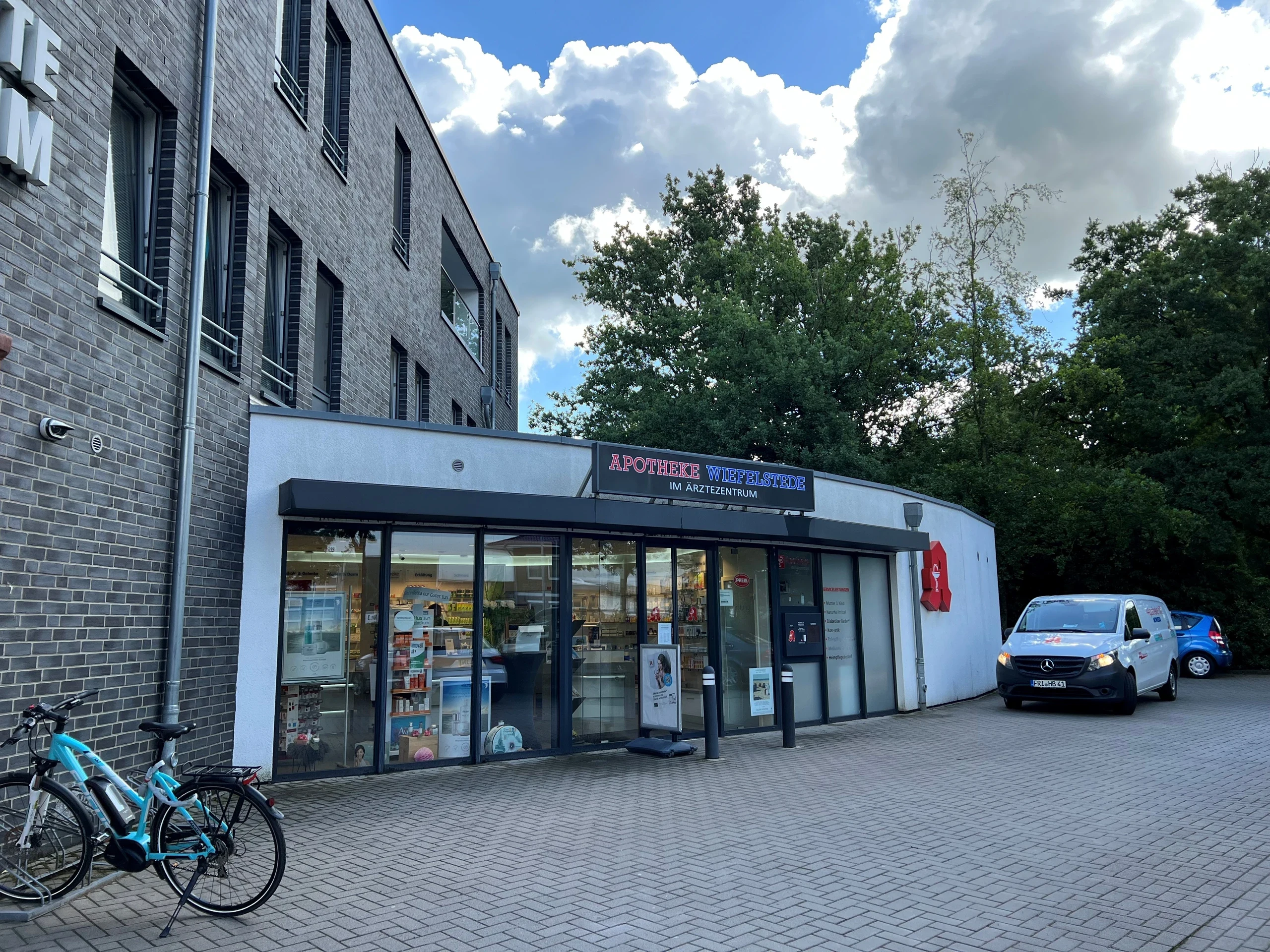
You probably think modern pharmacy is just a glorified vending machine where you drop a piece of plastic into a slot and walk away with a box of Ibuprofen. There’s a common idea that the “digital revolution” has turned the local pharmacist into a relic of the pre-internet age. You might think an algorithm will eventually replace the person behind the counter, the one who actually knows that your specific allergy makes that new medication a bad idea.
You’re wrong. An app can move a box from A to B, but it can’t interpret the nuance of a handwritten prescription or notice the subtle tremor in a patient’s hand that signals they might need a different dosage. Technology is a tool, not a replacement for judgment. In a small town like Wiefelstede, that distinction is the difference between a quick errand and actual healthcare.
Local pharmacies exist in a strange tension between high-tech logistics and human care. You have the convenience of mobile apps, yet you still need a real person who recognizes you when you walk through the door. It’s a balance that requires a very specific kind of local presence to pull off.
The Digital Ghost in the Dispensing Machine
The digital world tries to make everything frictionless. We live in an era where you can order a pizza, a car, and a pair of shoes with a few taps on a screen. It seems logical that getting medicine should be just as mindless. Some companies have leaned into this, building apps that try to make the whole process invisible.
Take the way some pharmacies operate, for example. You might find yourself looking at Hummel Apotheke Hamburg on Google Play, which lets you redeem prescriptions and order products directly from your phone. It’s efficient and it’s fast. But it’s also impersonal. You lose that “wait, are you sure about this?” moment that happens during a face-to-face conversation.
Efficiency is a double-edged sword. If you’re in a rush to get to work, the app is your best friend. If you’re using a specialized medication for the first time, the lack of human feedback can feel a bit chilling. The machine doesn’t care if you’ve read the fine print on the side effects; it only cares if your payment clears and the database is updated.
That’s why the physical storefront stays necessary. A pharmacy isn’t just a warehouse for pills; it’s a checkpoint. It’s the final layer of defense before a chemical enters your system. If you rely only on a screen, you lose the ability to ask the “what if” questions that only a licensed person can answer.
Geography and the Local Pharmacy Landscape
When you look at the healthcare map in this region, things get complicated. You aren’t just dealing with one entity, but a network of specialized services that overlap in confusing ways. People often assume all pharmacies do the same thing, but the reality is more granular. Some focus on retail, some on specialized compounding, and others on being a community fixture.
If you look at the Hummel-Apotheke in Oldenburg, you’ll see a different focus than what you’d find in a high-traffic city center. They handle specific areas like diabetes management and blood testing. They even do “Eigenherstellung,” which means they make their own specialized mixtures in-house. You simply cannot download that skill.
In Wiefelstede, the landscape is even more specific. You have various options, each with its own niche. You might find yourself comparing establishments based on their hours, their stock, or their specific expertise. It’s a crowded market, even in a small town. To know what you’re actually looking for, it helps to look at the specifics:
- Retail Focus: Standard over-the-counter medications and daily essentials.
- Specialized Compounding: Creating custom doses or mixtures for specific patient needs.
- Consultation-Heavy: Focusing on chronic condition management like diabetes.
- Digital Integration: Using apps and online portals for rapid prescription fulfillment.
You might also run into older, more traditional setups. The “Alte Apotheke” in Wiefelstede, for instance, operates under a different model entirely. They have a long-standing presence that relies on established relationships rather than app-driven logistics. It’s a different way of doing business, but it serves people who value continuity over speed.
If you want the specific details for the Hummel-Apotheke in Wiefelstede, check hummel-apotheke-wiefelstede.de to see how they operate locally. This matters because the “best” pharmacy depends entirely on whether you need a quick bandage or a complex medical consultation.
The Complexity of Modern Dispensing
Medicine isn’t a commodity like a loaf of bread. You can’t just swap one brand for another because the packaging looks better. When a pharmacist looks at your prescription, they’re performing a high-stakes audit. They’re checking for drug-to-drug interactions, making sure the dosage matches your weight and age, and verifying that the doctor’s intent matches the chemistry of the pill.
This is getting more complicated. You’re likely taking more medications now than your grandparents did. Maybe you take a daily vitamin, an allergy pill, and a prescription for blood pressure. A computer might catch how those items interact, but a human will actually understand them. A human understands the *why* behind the prescription.
But let’s be realistic. The workload is growing. Pharmacists are being pushed to be retail clerks and medical consultants at the same time. They have to manage a stock of high-end skincare and the high-stakes logistics of life-saving antibiotics simultaneously. It’s a difficult balancing act that takes a lot of professional stamina.
Then there’s specialized manufacturing. Not every shop can do it. The ability to create custom mixtures (Eigenherstellung) requires specialized equipment and deep chemistry knowledge. If you have a specific allergy to a filler in a commercial pill, you need a pharmacy that can build a custom version without that ingredient. You can’t get that from a vending machine, and you certainly won’t get it from a generic app.
The sheer variety of products is staggering, too. We’ve moved far beyond just “medicine.” Today’s pharmacy is a hybrid: a drugstore, a medical supply hub, and a specialized lab all at once. This complexity is why the pharmacist’s role is actually expanding, even if it feels like they’re just standing behind a counter.
| Service Type | Primary Benefit | Best For… |
|---|---|---|
| Standard Retail | Speed and availability | Common ailments, bandages, vitamins |
| Compounding | Customized dosage/ingredients | Allergies, pediatric doses, rare needs |
| Digital/App | Convenience and time-saving | Refilling existing prescriptions |
| Clinical Consultation | Expert advice and education | Chronic disease management |
Why the Local Connection Matters
There’s a certain comfort in knowing the person giving you your medication knows your history. It’s not about being “old-fashioned” for the sake of it; it’s about accuracy. If you’re a regular at a local spot, they know your name and, more importantly, your medical profile. They might remember that you struggled with a certain side effect last year.
This institutional memory is a type of data that no cloud-based server can fully replicate. A database knows your name and your last three prescriptions. A local pharmacist knows that you tend to take your meds with food or that you’re hesitant about a new, expensive brand. That context prevents errors and helps you actually stick to a treatment plan.
We often complain that life is becoming automated and cold. Yet, when we are actually sick, we often want someone to talk to. We want to ask, “Will this make me drowsy?” or “Can I take this with my morning coffee?” These are the questions that keep the local pharmacy economy alive.
So, what happens when the skeptics come knocking? They’ll say that the efficiency of big chains and the convenience of apps will eventually squeeze the life out of community pharmacies. They’ll argue that the neighborhood shop isn’t sustainable in a world of one-click ordering. They aren’t entirely wrong about the pressure, but they’re wrong about the outcome.
The pharmacy isn’t just a shop; it’s medical infrastructure. You can’t “disrupt” the need for human expertise in healthcare. You can only change how that expertise is delivered. Whether you use an app to save time or walk into a shop to ask a question, the goal is the same: getting you the right thing at the right time. The human element is the safety net that catches the mistakes the machines inevitably make.
Common questions
Where is Hummel Apotheke located in Wiefelstede?
Hummel Apotheke is located in the central area of Wiefelstede, serving the local community with pharmaceutical services.
What services does Hummel Apotheke offer?
The pharmacy provides prescription medications, over-the-counter drugs, health supplements, and professional pharmaceutical advice.
Can I get medical advice at Hummel Apotheke?
Yes, the pharmacists at Hummel Apotheke offer expert consultations regarding medication usage and health products.
Does Hummel Apotheke offer prescription fulfillment?
Yes, they specialize in processing and dispensing both private and statutory health insurance prescriptions.
How can I find the opening hours for Hummel Apotheke?
Opening hours can be verified by visiting the pharmacy in person or checking their official local business listing.