
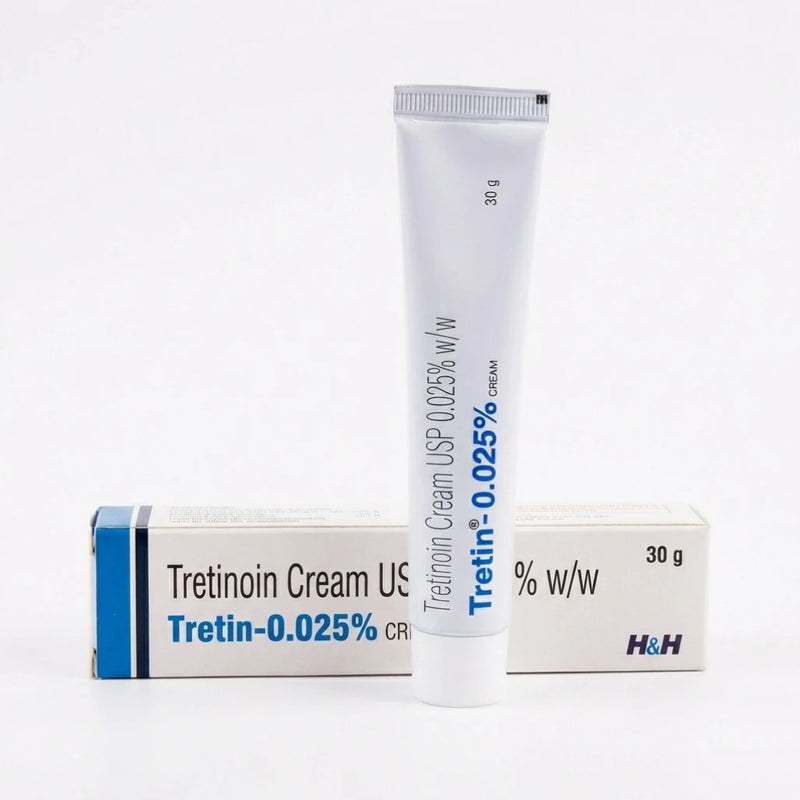
It is roughly 20 times stronger than the high street retinol you find in a drugstore aisle. While most over-the-counter retinoids work by slowly converting through several stages before reaching their active state, tretinoin is already at the finish line. It is a direct, potent hit to your skin’s biological processes.
We see it everywhere in dermatological discussions. People talk about it like it is a magic wand, but the reality is much more clinical and, frankly, much more demanding. It is a prescription-strength topical medication that doesn’t care about your skin’s comfort level; it only cares about the cellular results.
If you have ever looked in the mirror and felt like your skin texture was losing its battle against time or sun exposure, you have likely encountered the name. It is the heavy hitter in the world of topical retinoids, and it changes how your skin behaves at a fundamental, microscopic level.
What does tretinoin do for skincare?
Tretinoin works by speeding up your skin’s cell turnover, which essentially forces your skin to produce new, healthy cells much faster than it naturally would. This accelerated cycle is what makes the visible changes possible. It is not a surface-level moisturizer that just sits on the top layer of your epidermis.
Because it pushes those cells through the cycle more quickly, it helps to unclog pores, prevent breakouts, and smooth skin texture over time. This is why it is so effective for acne. It prevents the “glue” that holds dead skin cells together from sitting in your pores and creating a plug.
Beyond acne, it addresses the structural issues of aging. It targets fine wrinkles, dark spots, and the rough skin texture often caused by the damaging rays of the sun. By forcing the skin to renew itself, you are effectively replacing the damaged, sun-scorched outer layers with fresher, more organized tissue.
The results aren’t immediate. You might see a breakout or some redness in the first few weeks, but the real magic happens in the long term. You are essentially retraining your skin to operate on a faster, more efficient timeline. It is a marathon, not a sprint.
Is there a downside to using tretinoin?
The primary downside is the “retinoid ugly phase,” which involves dryness, peeling, and significant irritation. Because you are forcing the skin to shed cells at an unnatural rate, your skin’s moisture barrier can take a hit if you aren’t careful. It can feel tight, itchy, and sometimes even raw.
Common side effects include redness and sun sensitivity. Because the new skin cells being pushed to the surface are young and delicate, they are much more susceptible to UV damage. If you use tretinoin at night but skip your sunscreen during the day, you are likely making your skin damage worse rather than better.
We often see patients struggle with this initial period. It can be frustrating to use a product intended to make you look better only to end up with flaking skin that makes makeup impossible to apply. It requires patience and a very disciplined approach to hydration.
To manage these issues, most dermatologists suggest a “low and slow” approach. You don’t start with a massive glob of cream every night. You start small, maybe twice a week, and gradually build up your tolerance as your skin adjusts to the new speed of turnover.
A sample comparison of typical ingredients and their strengths might look like this:
| Ingredient Type | Strength Level | Primary Use Case |
|---|---|---|
| Retinol (OTC) | Low to Moderate | Preventative anti-aging, mild texture improvement. |
| Retinaldehyde | Moderate | More potent than retinol, faster conversion. |
| Tretinoin (Rx) | Very High | Active acne, deep wrinkles, hyperpigmentation. |
How to use tretinoin without destroying your skin barrier
The correct way to use tretinoin involves a specific hierarchy of products to ensure your skin stays hydrated while undergoing the chemical transformation. You should never apply it to damp skin, as moisture can actually increase the absorption rate and lead to more severe irritation. Wait at least twenty minutes after washing your face before applying your prescription.
A common method is the “sandwich technique.” You apply a thin layer of moisturizer first, wait for it to dry, apply a pea-sized amount of tretinoin, and then apply another layer of moisturizer on top. This creates a buffer that slows down the delivery of the medication just enough to prevent extreme peeling without negating the benefits.
It is vital to remember that a pea-sized amount is enough for your entire face. Using more won’t make it work faster; it will only make your skin peel more aggressively. Think of it as a concentrated treatment rather than a standard moisturizing cream. Many people find that Tretinoin Face Cream Rx is easier to manage when they follow this layering method.
Your routine should also be stripped down. During the “purging” or adjustment phase, put away your exfoliating acids and physical scrubs. Using a Vitamin C serum or a glycolic acid cleanser alongside tretinoin is a recipe for a chemical burn. Keep it simple: cleanse, hydrate, tretinoin, hydrate.
- Step 1: Gentle, non-stripping cleanser.
- Step 2: Hyaluronic acid or a basic, fragrance-free moisturizer.
- Step 3: A pea-sized amount of tretinoin on completely dry skin.
- Step 4: A thick, occlusive moisturizer (especially if you are prone to dryness).
- Step 5: Broad-spectrum SPF 30+ every single morning.
What happens if I use tretinoin every day?
If your skin is acclimated, using it every day is the standard for seeing maximum results in terms of fine lines and acne control. However, for many, daily use too early is what leads to the dreaded “retinoid burn.” If you see redness or stinging when you apply a basic moisturizer, your skin is telling you that you’ve gone too far, too fast.
When you use it daily, you are essentially maintaining a high rate of cell turnover. This is excellent for preventing pores from clogging and for keeping skin texture smooth, but it requires a very robust skincare routine to support that activity. You cannot use tretinoin daily if you are also using other aggressive actives without a plan.
Do you actually need it every night? Not necessarily. Many people find that using it three or four times a week provides 90% of the benefits with only 10% of the irritation. It is a personal calibration process. You have to listen to your skin’s signals rather than following a rigid calendar.
If you do experience significant peeling, do not push through the pain. It is better to take two nights off and focus entirely on barrier repair than to continue causing inflammation. Inflammation is the enemy of anti-aging; it can actually trigger more pigment production and worsen the very things you are trying to fix.
At what age should I start using tretinoin?
There is no single “correct” age to start, but the purpose of the application usually dictates when you should begin. If your primary goal is acne management, you might start in your teens or early twenties. In that case, you are using it to regulate oil and clear out pores before they become permanent scarring issues.
If your goal is anti-aging, the conversation shifts toward prevention and correction. Many dermatologists suggest starting a retinoid, either a lower-strength OTC retinol or a prescription tretinoin, in your late 20s or early 30s. This is when natural collagen production begins to slow down and sun damage starts to manifest as fine lines.
Starting earlier can be a way to proactively manage skin texture and sun damage. However, you must be diligent about sun protection. If you are a teenager using tretinoin, you are essentially committing to a lifetime of daily sunscreen use. If you aren’t prepared for that commitment, you might be better off starting with a milder, non-prescription option.
Some people wait until they see visible wrinkles to begin, but by then, you are in “correction mode” rather than “prevention mode.” While tretinoin is incredibly effective at smoothing out existing lines, it is much easier to maintain skin density than it is to rebuild it once it has significantly lost its elasticity.
The decision often comes down to your skin type and your lifestyle. If you spend a lot of time in the sun or have oily, acne-prone skin, you might find the benefits outweigh the risks much sooner. If you have sensitive, dry skin, you may want to wait or use it much more sparingly.
What about the skepticism? You might be thinking that the irritation and the high price of prescription-strength products aren’t worth the hassle of a peeling, red face. But when you consider that tretinoin is a prescription-strength medication that fundamentally alters your skin’s ability to repair itself, the “hassle” is often a temporary investment for a long-term structural change in how your skin ages. For the full picture, it’s worth checking HappyHealth Tretinoin Cream.