
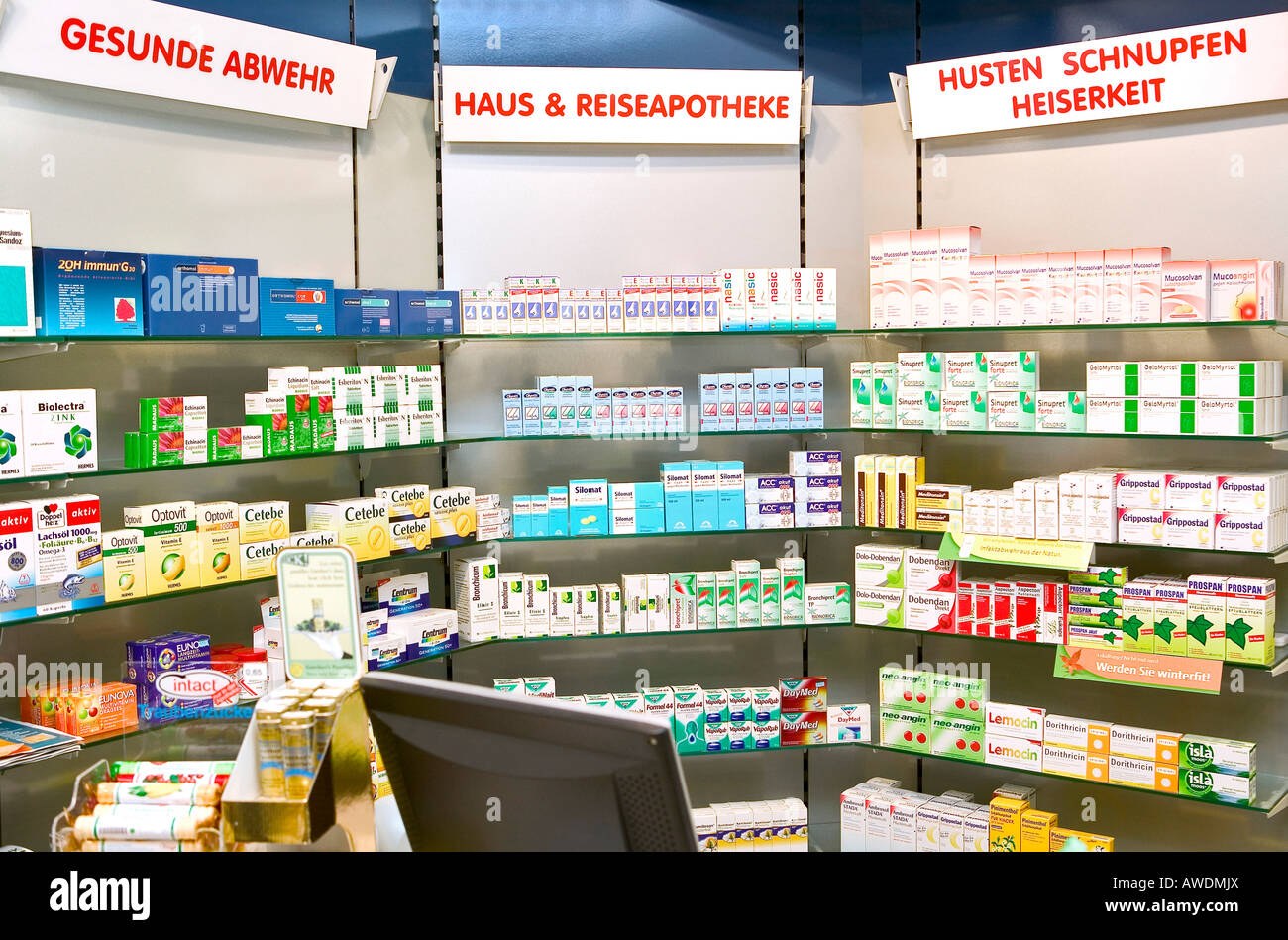
You won’t find a bottle of Advil sitting next to the milk and eggs in a German supermarket. If you walk into a REWE or an Aldi expecting a quick grab-and-go solution for a pounding headache, you’re going to leave empty-handed and frustrated. In Germany, the concept of “over-the-counter” medication is strictly gatekept by a specialized network of pharmacists. Your local pharmacy isn’t just a retail shop; it’s a controlled medical checkpoint.
This isn’t an accident or a quirk of local preference. It’s the result of a highly regulated system that prioritizes safety and professional consultation over the convenience of rapid consumption. While Americans or Brits might view the ability to buy painkillers in a supermarket as a convenience, Germans see it as a potential public health risk.
If you are living in Germany or visiting for an extended period, you need to understand that the pharmacy, or Apotheke, is your primary point of contact for almost all health-related products. This system ensures that every time you reach for medicine, a trained professional is there to intervene, advise, or at least verify that you aren’t about to make a mistake.
The Apotheken Monopoly and Strict Control
In many countries, the line between a convenience store and a pharmacy is incredibly blurry. In Germany, that line is a brick wall. Even common medications like paracetamol and ibuprofen are sold almost exclusively through pharmacies. You won’t see them in a gas station or a drugstore like dm or Rossmann. This means if you have a fever at 11:00 PM, you can’t just pop down to the corner shop; you have to find an open Apotheke.
The scale of this industry is massive. The Federal Union of German Associations of Pharmacists acts as the umbrella organization for more than 70,000 pharmacists across the country. This high density of professionals ensures that even in smaller towns, you are never far from medical advice. However, it also means you are entering a strictly regulated commercial environment.
While the system is designed for safety, these pharmacies are still businesses. They operate within a framework of fixed prices for many prescription drugs, but the service you receive is where the value lies. You are paying for the expertise of someone who can tell you if your cough medicine will interact poorly with your blood pressure medication. Is the price of that peace of mind worth the extra trip to the shop?
Many people find they need more than just a single tablet; they need advice on dosage or side effects. When you visit a place like Lorsbacher Apotheke, you are engaging with a system where the pharmacist is often the most accessible healthcare professional you will meet. They act as a first line of defense in the German medical hierarchy, often catching issues before they require a doctor’s visit.
The regulations are notably strict. You cannot simply walk in and demand certain substances. The distinction between “rezeptfrei” (available without a prescription) and “rezeptpflichtig” (prescription only) is the fundamental dividing line of German healthcare. If it’s prescription-only, the pharmacist cannot sell it to you without a piece of paper signed by a licensed physician.
Navigating the Prescription Hierarchy
Understanding how to actually get your hands on medicine requires knowing the difference between the different types of “receipts” you will encounter. In Germany, a doctor’s prescription is the golden ticket. Without it, many of the most effective medications are completely off-limits, no matter how much cash you have in your pocket. This is why the German healthcare system is often described as being highly integrated but also highly bureaucratic.
There are actually different colors and formats of prescriptions that you will see in a pharmacy. If you are a resident with German health insurance, your prescription might look different than if you are a visitor. This can be confusing when you are standing at a counter with a headache and a piece of paper that doesn’t look like what you expected.
| Prescription Type | Who Uses It? | Key Characteristic |
|---|---|---|
| Pink (Rosa) | Statutory Insured (Public) | The patient pays a small co-payment. |
| Blue (Blau) | Private Insured / Self-pay | The patient pays the full cost upfront. |
| Green (Grün) | Ancillary/Non-prescription | Used for vitamins or certain OTC items. |
| Yellow (Gelb) | Specialized/Chronic | For long-term, recurring prescriptions. |
If you are traveling, you must have your physical or digital prescription ready. You cannot simply show a doctor a note on your phone in many cases; they often require the formal document. It is a common mistake for expats to assume that because they have a prescription from a doctor in their home country, a German pharmacist will just hand over the pills. Usually, they won’t. You will likely need to visit a local German doctor first to get a local prescription.
The pharmacist’s role extends beyond just handing over a box. They are trained to check for contraindications. For instance, if you are buying a common decongestant, they might ask if you have high blood pressure. It’s a level of scrutiny that feels intrusive at first, but it’s a core part of why the German system keeps its drug-related complications relatively low compared to more laissez-faire markets.
Emergency Access and After-Hours Logistics
Life doesn’t stop when the pharmacy doors close at 6:00 PM. Germany has a very specific system for handling medical needs outside of standard business hours. You don’t have to go to a hospital emergency room for a minor ailment just because the local Apotheke is closed. Instead, there is an “emergency service” rotation.
Every pharmacy is part of a rotating duty system. Each town or district has designated pharmacies that remain open through the night, on weekends, and on public holidays. You can find out which pharmacy is currently on duty by looking at the sign posted on the door of any closed pharmacy, or by checking the official government health portals. This ensures that even at 3:00 AM, you can get essential medication if you have a sudden emergency.
For those who prefer to manage their health from home, the digital landscape has expanded. You can use an online pharmacy to have medications delivered to your door, which is particularly useful for non-prescription items. One such option is an online pharmacy in Freiburg that offers worldwide shipping, which can be a lifesaver if you are trying to get specific brands that aren’t common in Germany.
However, don’t rely on the internet for emergencies. The shipping costs, often around €4.90, and the delivery time are not suitable for an acute situation. For immediate needs, the physical Apotheke is your only reliable option. If you find yourself in a situation where a pharmacy is closed and you need something urgently, look for the “Notdienst” sign in the nearest window.
Keep in mind that even with an emergency service, you will still have to deal with the physical reality of the shop. You cannot simply order a 24-hour emergency dose through an app and have it appear at your door. You have to physically walk to the duty pharmacy, show your ID or your prescription, and wait your turn. It is a bit of a hassle, but the system is built to be robust and reliable.
The Cost of Care and Insurance Realities
If you are a tourist, the biggest shock won’t be the regulations, but the price tag. In many countries, you can buy a basic bottle of aspirin for a couple of dollars. In Germany, because of the tight controls and the high level of professional service, prices are often higher than you might expect for simple items. You are paying for the oversight of a specialist.
The way you pay depends heavily on your status in the country. If you are part of the German statutory health insurance system, most of your prescription costs are covered, though you will typically pay a small co-payment (usually between €5 and €10) per item. This is a standard part of the social insurance model that keeps the bulk of the cost from hitting the individual directly.
If you are using private insurance or paying out of pocket, the experience is different. You pay the full price at the counter and then file a claim with your insurance company later. This is why it is vital to always keep your receipts (Kassenbon) and any documentation provided by the pharmacist. Losing that little slip of paper can mean losing the ability to get reimbursed for a significant medication expense.
Germany’s pharmaceutical regulations are fairly strict, which keeps the market stable but also limits competition in the retail space. You won’t see a “sale” on antibiotics. The prices are largely standardized, which prevents pharmacies from engaging in price wars that could potentially compromise the quality of service or the availability of stock. It’s a trade-off of convenience for stability.
If you are visiting from the US or another country, you might be used to a very different pharmacy experience where you pick up a vast array of vitamins and beauty products alongside your medication. In Germany, the “drugstore” (Drogerie) is for the soaps, shampoos, and vitamins, while the “pharmacy” (Apotheke) is for the medicine. If you try to buy a specific medicated cream at a supermarket, you will simply find yourself staring at a shelf of toothpaste and laundry detergent.
If you are planning to visit or move to Germany, always carry a digital or physical copy of your current prescriptions to avoid having to visit a German doctor just to get a local equivalent of a medication you already use.