
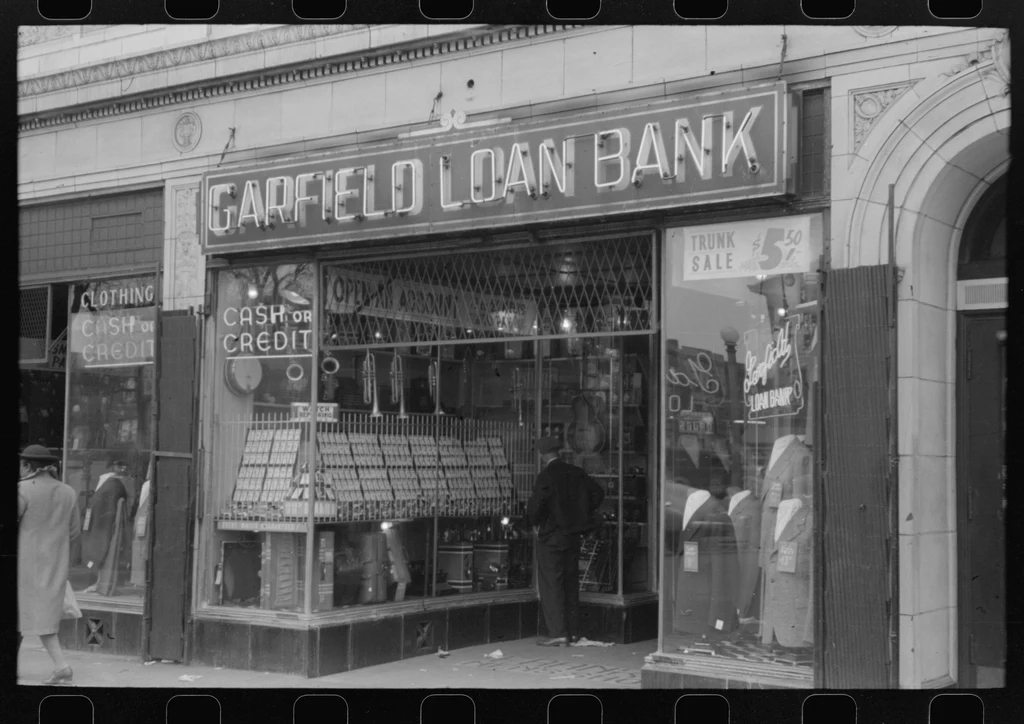
It’s Tuesday night in Naperville. You’re sitting at your kitchen table, staring at a pile of utility bills and a sudden, scary estimate for a plumbing repair that isn’t going to wait. The radiator is hissing, the basement smells like damp earth, and your savings account looks more like a rounding error than a safety net. You know you need a bridge to get through the next few months, but the idea of walking into a local credit union feels intimidating when you aren’t even sure if your credit score is high enough to bother.
We’ve seen this play out more times than we can count. Life in Illinois often comes with these sudden, expensive jolts that don’t care about your budget or your long-term plans. Whether it’s a medical bill, a car that died in the middle of a Chicago winter, or a home renovation that spiraled out of control, the need for quick cash is just a regular part of life here.
Taking out a loan isn’t a failure, but it is a tool that requires a steady hand. You have to look at the fine print, understand what you owe, and decide if the speed of the money is worth the cost of the interest. Don’t make this decision while you’re panicking, even though that’s exactly when you’ll feel the strongest urge to sign anything just to make the problem go away.
The Local vs. The Digital Divide
In the past, if you needed cash, you drove to a bank branch, sat in a waiting room, and talked to a person who might or might not know your name. Today, the options have split into two very different worlds. You have the traditional local institutions that know the neighborhood, and you have the massive, invisible digital lenders that exist only on your smartphone screen.
Local banks and credit unions offer a sense of community stability. They might look at your history in the state or your standing with them over the last decade. If you have a relationship with a local branch in Springfield or Peoria, they might be more willing to listen to a story about a temporary setback. However, they are often slower. They want paperwork, they want physical signatures, and they want to see your life in a way that digital algorithms simply cannot capture.
On the other side, there’s the speed of the internet. If you are looking for personal loans online Illinois providers can offer a level of convenience that feels almost magical. You apply from your couch, upload a photo of your pay stub, and the money hits your account while you’re still finishing your coffee. It’s efficient, but that efficiency often comes with a lack of human recourse. If the algorithm says no, there isn’t a manager you can talk to about your specific situation.
Choosing between them depends entirely on your timeline and your temperament. If your roof is leaking right now, speed is your primary driver. If you’re planning a wedding six months from now, you might want the personalized touch and potentially better rates found at a community-focused institution. You have to weigh the luxury of time against the necessity of speed.
Consider these differences when deciding where to start your search:
- Traditional Banks: Slower processing, potentially better rates for long-term customers, requires physical presence or extensive documentation.
- Credit Unions: Often more flexible with credit scores, community-focused, might offer more personalized service.
- Online Lenders: Extremely fast, high convenience, often use automated decisioning that can be rigid.
Deciphering the Cost of Speed
Everyone talks about the monthly payment, but that’s only half the story. The real cost of a loan is hidden in the math of the interest rate and the term length. People often make the mistake of choosing a loan because the monthly payment is small, forgetting that a smaller payment usually means you’re paying for that loan for a much longer period of time. You end up paying back double what you originally borrowed.
Interest is the price you pay for the privilege of using someone else’s money today. In Illinois, you’ll see different ways this is presented. Some lenders use a flat fee, while others use an annual percentage rate. Look closely at the APR because that’s the number that actually tells you the truth about what the loan costs over the long haul. It includes the interest and any other mandatory fees the lender is tucking into the fine print.
We’ve seen people get trapped in cycles of debt because they didn’t look at the total cost of credit. They saw a $200 a month payment and thought, “I can handle that,” without realizing the loan lasts six years. That’s a lot of years to be tethered to a piece of metal or a broken furnace. Be honest about your cash flow before you sign anything. If you can’t afford the payment on a bad month, you shouldn’t take the loan.
The math gets complicated quickly when you start comparing different products. Look at this breakdown of how different structures affect your wallet:
| Loan Type | Typical Term | Speed of Funds | Primary Risk |
| Short-term | 6-18 Months | Very Fast | High Monthly Payment |
| Long-term | 3-5 Years | Moderate | High Total Interest |
| Unsecured | Variable | Fast | Higher Interest Rates |
It’s a balancing act. You want the money fast, but you want the cost low. You rarely find a product that is both lightning-fast and incredibly cheap. You are always trading one for the other. Pick the one that matches your actual emergency.
The Weight of Your Credit Profile
Your credit score is essentially a grade on how well you handle your obligations. In the lending world, it’s the single most important thing you own. It acts as a gatekeeper. If your score is high, the gates open wide and the terms are favorable. If your score is struggling, the gates may stay shut, or they might open only if you’re willing to pay a massive premium for the privilege of entering.
Many people think that a single late payment or a high balance on a credit card means they are doomed. That isn’t true. Credit scores are dynamic. They move up and down. A single mistake doesn’t ruin you forever, but a pattern of mistakes will make lenders very nervous. They see patterns, and patterns suggest risk. They aren’t just looking at whether you pay on time; they are looking at how much of your income is already spoken for by other debts.
If your credit is less than ideal, you might look into secured options, though these are less common for personal loans. A secured loan is backed by an asset, like a vehicle or a savings account, which gives the lender a safety net if you stop paying. This makes them much more willing to give you a chance. Unsecured loans, which are what most people mean when they say “personal loan,” rely entirely on your promise to pay. That’s why they are much harder to get with a low score.
Managing your credit in Illinois requires discipline. You should monitor your reports regularly to ensure there are no errors. Sometimes, a debt that isn’t yours or a mistake by a creditor can drag your score down unfairly. Fixing these errors is often the fastest way to improve your borrowing power without actually increasing your income. It’s about cleaning up your financial hygiene before you go out to shop for capital.
It’s a steep climb. Sometimes you have to take one step back to take two steps forward. Don’t let a temporary low score convince you that you can never borrow money again. It’s a snapshot, not a life sentence.
Avoiding the Debt Trap in the Windy City
There is a specific kind of predatory behavior that exists in the shadows of the lending industry. These lenders often target people when they are most vulnerable, right when the car broke down or the medical bill arrived. They offer “easy money” with very little documentation, but the catch is that the interest rates are astronomical, sometimes approaching the levels of a payday loan. These loans don’t help you solve a problem; they create a whole new, much larger problem.
A legitimate loan will always be transparent. They will tell you exactly what the interest rate is, exactly what the monthly payment will be, and exactly how long you will be paying it back. If a lender is being vague, or if they tell you to “just sign here and we will figure out the details later,” walk away. That’s not a loan; that’s a trap. Real lenders want you to succeed so that you can pay them back, not so you default and they can seize your assets.
Compare at least three different offers before making a final decision. Even if one seems perfect, check another. You might find that a slightly higher monthly payment on a shorter-term loan actually saves you thousands of dollars over the life of the debt. It’s worth the thirty minutes of extra research to save your future self from a mountain of stress. The goal is to use the loan to solve a problem, not to become a problem for yourself.
Before you commit, ask these questions:
- What is the total amount I will have paid back by the time this loan is finished?
- Is there a prepayment penalty if I decide to pay it off early?
- What happens if I miss a single payment?
- Are there any hidden fees for processing or administrative tasks?
You might be thinking, “But what if I don’t have any other choice and I just need the money right now?”
If you’re truly in an emergency and your credit is poor, look for non-profit credit counseling services in your area before you turn to high-interest lenders. They can often help you negotiate with creditors or find ways to manage your debt that don’t involve taking on even more expensive debt. It is much harder to dig yourself out of a hole once you have started falling.
Quick answers
What is the maximum personal loan amount available in Illinois?
Loan amounts typically range from $1,000 to $50,000, depending on the lender and the borrower's creditworthiness.
Are there specific interest rate caps for personal loans in Illinois?
While personal loans are often subject to usury laws, rates vary significantly based on the lender, the loan type, and the borrower's credit score.
What are the requirements to qualify for a personal loan in Illinois?
Applicants generally need to be at least 18 years old, have a valid Social Security number, and demonstrate steady income and a stable residence in Illinois.
Can I get an unsecured personal loan in Illinois?
Yes, many lenders in Illinois offer unsecured personal loans that do not require collateral, though these often come with higher interest rates.
How long does it take to receive personal loan funds in Illinois?
Approval can be instant, and once approved, funds are typically deposited into your bank account within one to five business days.