Where can you get an emergency loan right now? The answer really depends on how much cash you need and how long you’re willing to wait. If your transmission just blew out on I-94 or your fridge quit working in a Milwaukee apartment, you probably need liquidity within hours, not weeks.
In the Wisconsin lending market, speed and cost are on opposite ends of a seesaw. You can get money almost instantly, but you’ll pay for that speed through high interest rates or collateral requirements. On the flip side, you can find low-interest or even zero-interest options, but the eligibility requirements are a lot tougher.
Most people in a crisis aren’t looking for a long-term financial plan; they’re just trying to survive the next seventy-two hours. Knowing how Wisconsin’s lending tiers work is the only way to avoid a debt spiral while solving a temporary cash gap.
The Immediate Liquidity Tier: Fast Cash and High APRs
When an emergency hits, the clock is the enemy. For many, the first instinct is to look for a local storefront or an online lender promising same-day or next-day funding. These providers often specialize in “bad credit” scenarios, which means they care more about your current income stream than your FICO score.
Lenders like Advance America offer personal and emergency options that can provide between $200 and $5,000. These loans are designed for speed, and they often provide transparency regarding terms to avoid the “gotcha” moments common in the payday industry. This is the “bridge” option for people who know they’ll have money next month but can’t wait until payday to fix a leaking pipe.
However, speed comes with a heavy price tag. The cost of capital in this sector is high. For instance, Leap Credit provides online installment loans in Wisconsin that feature an APR range between 587% and 795%. This isn’t a loan you take out to buy a car; it’s a loan you take out to prevent an eviction or a utility shut-off.
| Lender Type | Typical Amount | Speed of Funding | Primary Trade-off |
|---|---|---|---|
| Short-term Installment | $250 – $5,000 | Same-day to 24 hours | Extremely high APR |
| Title Loans | Variable | Immediate | Collateral risk (Vehicle) |
| Personal Loans | Up to $5,000 | 1-3 business days | Credit score dependent |
If you end up in this tier, the math has to be brutal and honest. You’re essentially buying time. If you borrow $500 for a car repair that lets you get to work, the high interest is just a cost of doing business. If you borrow $500 for a luxury item you didn’t need, you’re making a catastrophic financial error.
Collateral-Based Borrowing and Credit Limitations
For those with bruised credit scores, traditional bank loans are usually a non-starter. This is where “asset-based” lending comes in. In Wisconsin, title loans are a common way to access cash when the bank says no. These loans use your vehicle as security for the debt.
Wisconsin Auto Title Loans, Inc. handles these types of requests, specifically catering to those who need emergency cash despite having bad credit. Because the lender has a legal claim to your vehicle if you default, they’re willing to overlook a low credit score. It makes it an accessible option, but it carries the risk of losing your primary way to get around.
The mechanics of these loans are straightforward but dangerous if you mismanage them. You provide the title, they provide the cash. If you can’t pay it back, they take the car. It’s a high-stakes gamble.
- Title Loans: Fast access using vehicle equity.
- Installment Loans: Fixed payments over a set term.
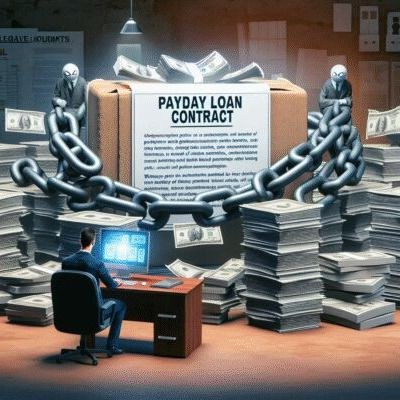
- Payday Loans: Short-term, high-interest, often due on next payday.
Take, for example, a worker in Eau Claire who faced a $400 medical bill. They couldn’t wait for a standard loan approval, so they used a small title loan. They paid it off in six weeks, but the total cost ended up being nearly double the original amount because of the interest structure. It solved the immediate problem, but the “cost of convenience” showed up in their bank statement for months.
It’s a hard choice.
State-Assisted Options and Employment-Linked Support
Not all emergency cash in Wisconsin is predatory. The state offers specific programs designed to stop a temporary crisis from becoming a permanent downward spiral. These are typically tied to employment status or existing social safety nets.
The most notable example is Job Access Loans (JAL). These aren’t your typical high-interest products. Instead, JALs are short-term, no-interest loans designed to assist eligible individuals to meet emergency needs that support employment. This might include a car repair needed to get to a job or a sudden childcare expense that would otherwise cause a parent to miss shifts.
These loans are meant to be a ladder, not a trap. They exist because the state recognizes that a $200 car repair can be the difference between staying employed or falling into long-term poverty.
The eligibility for these programs is much narrower than commercial lending. You can’t just apply because you want a new phone. You generally need to be part of a specific program, like W-2, and the expense must be directly tied to your ability to keep your job.
If you’re looking for an immediate solution through these channels, you won’t find them at a 24/7 online portal. You’ll have to deal with state agencies, which involves paperwork and verification of your specific circumstances. It is slower, but it is infinitely cheaper.
Digital Lenders and the Rise of Online Applications
The way people borrow has shifted toward the digital space. You no longer have to drive to a storefront in a strip mall to find a lender. In many cases, the whole process, from application to funding, happens on a smartphone.
Providers like Max Cash® allow for 24/7 online applications. For many, this is the only viable option because emergencies don’t happen during 9-to-5 business hours. They offer smaller amounts, typically between $250 and $500, meant for quick, small-scale emergencies.
Online lenders often use automated underwriting. This means their algorithms look at your bank transactions and income frequency rather than just a static credit score. This is why they can often approve people who would be rejected by a traditional credit union.
However, the convenience of a “fully online application” can be a double-edged sword. It’s very easy to click “accept” on terms that are hard to read when you’re stressed and in a rush. You should always check for:
- The exact APR (Annual Percentage Rate).
- The total amount you will have paid back by the end of the term.
- The penalties for late payments.
- Whether there are any prepayment penalties if you try to pay the loan off early.
A quick check on Wiscloans or similar resources can help you compare these digital offerings before you hit the final “submit” button.
Evaluating the Real Cost of Emergency Capital
Before you take out any loan in Wisconsin, do the math. Most people only look at the monthly payment. A $50 monthly payment sounds manageable. They forget to look at the term. If that $50 payment is required every week for six months, you’re paying $300 a month for a $300 loan. That is a mathematical disaster.
You need to distinguish between a “loan” and a “debt trap.” A loan is a tool used to bridge a gap. A debt trap is a cycle where you take out a new loan to pay off the old one.
If you’re choosing between a personal loan from a credit union and an installment loan from an online lender, the credit union is almost always the better choice if you qualify. Even if their approval takes three days instead of three hours, the thousands of dollars saved in interest are worth the wait.
If you find yourself in a position where you must take a high-interest loan, have a repayment plan ready before the money hits your account. Don’t wait until the first installment is due to figure out where the money is coming from.
Always verify the lender’s physical presence or their registration with the state to ensure you aren’t dealing with an unregulated entity.
Check your bank statements for any recurring “service fees” that aren’t explicitly mentioned in your initial agreement.